

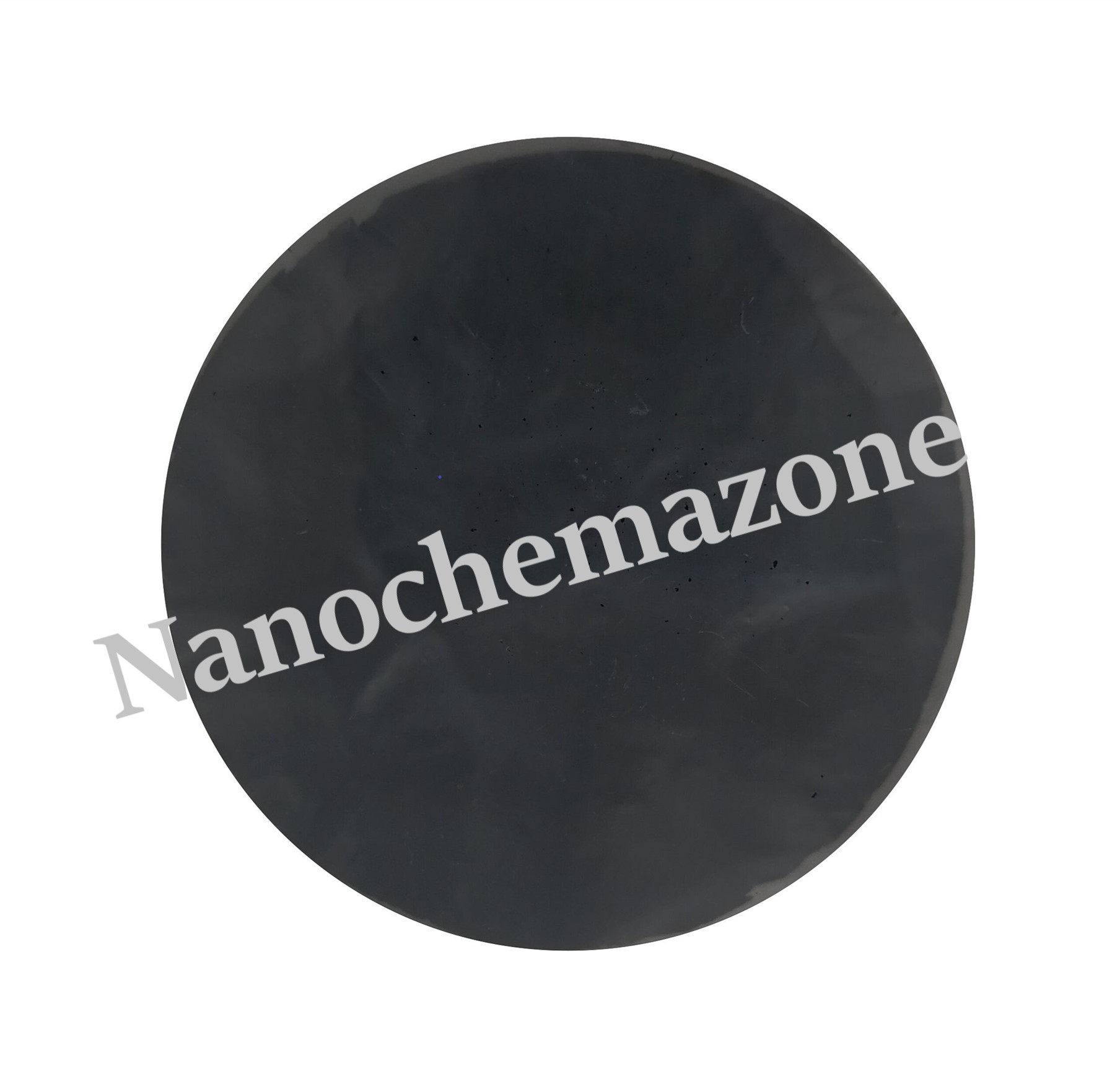
MAX phases are a family of layered ternary carbides and nitrides that combine properties of metals and ceramics. They have attracted renewed interest because they are the parent materials for MXenes, but they are also useful in their own right as machinable, damage-tolerant ceramics and as coating and sputtering materials.
What does “MAX” stand for?
MAX phases have the general formula Mn+1AXn, where:
- M is an early transition metal, such as Ti, V, Cr, Zr, Nb, Mo, Hf or Ta
- A is an A-group element, most often Al, Si, Ga, Ge or Sn
- X is carbon and/or nitrogen
- n is usually 1, 2 or 3, giving the “211”, “312” and “413” families
The structure consists of layers of Mn+1Xn separated by single atomic layers of the A element. The bonding between the A layer and the carbide or nitride layers is weaker than within them, which explains both their unusual properties and the possibility of etching out the A layer to make MXenes.
Common MAX phase compositions
| Family | Examples | Typical interest |
|---|---|---|
| 211 (M2AX) | Ti2AlC, V2AlC, Cr2AlC, Nb2AlC, Ti2AlN | Oxidation-resistant coatings, precursors for M2X MXenes |
| 312 (M3AX2) | Ti3AlC2, Ti3SiC2 | Ti3C2Tx MXene production, machinable ceramics |
| 413 (M4AX3) | Ti4AlN3, Nb4AlC3, Ta4AlC3 | Precursors for M4X3 MXenes |
Properties of MAX phases
- Good electrical and thermal conductivity, closer to metals than ceramics
- Machinable with conventional tools, unlike most ceramics
- High stiffness, low density and good damage tolerance
- Resistance to thermal shock and, for Al-containing grades such as Ti2AlC and Cr2AlC, good high-temperature oxidation resistance through a protective alumina layer
MAX phases as MXene precursors
Most MXene research starts with a MAX phase powder. Selective etching of the A layer, typically with hydrofluoric acid or fluoride-containing mixtures such as LiF/HCl, removes the aluminium and leaves stacked Mn+1XnTx layers, which can then be delaminated into single flakes. Ti3AlC2 is by far the most widely used precursor, because it produces Ti3C2Tx, the best-studied MXene. Read more in our guide What is MXene?
For etching work, the quality of the MAX phase matters: phase purity (checked by XRD), particle size and the amount of secondary phases such as TiC or Al2O3 all influence the yield and quality of the resulting MXene. Etching must be done only by trained personnel with suitable fume hoods and protective equipment, because HF and fluoride etchants are highly hazardous.
Other applications
- Sputtering targets and coatings – MAX phase targets are used to deposit protective, conductive or wear-resistant thin films.
- High-temperature components – heating elements, burner nozzles and parts exposed to thermal cycling.
- Electrical contacts – thanks to their combination of conductivity and damage tolerance.
- Composite reinforcement – in metal and ceramic matrix composites.
Buying MAX phases in India
Aritech Chemazone supplies MAX phase powders and targets manufactured by Nanochemazone Canada, including Ti3AlC2, Ti2AlC, V2AlC, Cr2AlC, Nb2AlC and many other compositions. See MAX phase powders, MAX phase targets such as the Ti3AlC2 MAX phase target and ready-made MXene powders, flakes and dispersions. Use Get Quotation on any product page for an INR price with GST.
Frequently asked questions
What is the most common MAX phase?
Ti3AlC2 is the most widely used, mainly as the precursor for Ti3C2Tx MXene. Ti2AlC and Ti3SiC2 are also common.
What is the difference between a MAX phase and a MXene?
A MAX phase is the bulk layered ceramic containing the A element (usually Al). A MXene is the 2D material obtained after the A layer is etched away and the layers are separated.
What particle size of MAX phase should I order for etching?
Fine powders (commonly below about 40 µm, for example −400 mesh) are generally preferred for etching. Tell us your intended method and we can suggest a suitable grade.
Can you supply custom MAX phase compositions?
Yes. Non-standard and solid-solution MAX phases can be produced through our custom synthesis service.
Do you supply MAX phase sputtering targets?
Yes, MAX phase targets are available in standard diameters and thicknesses, with custom sizes on request.