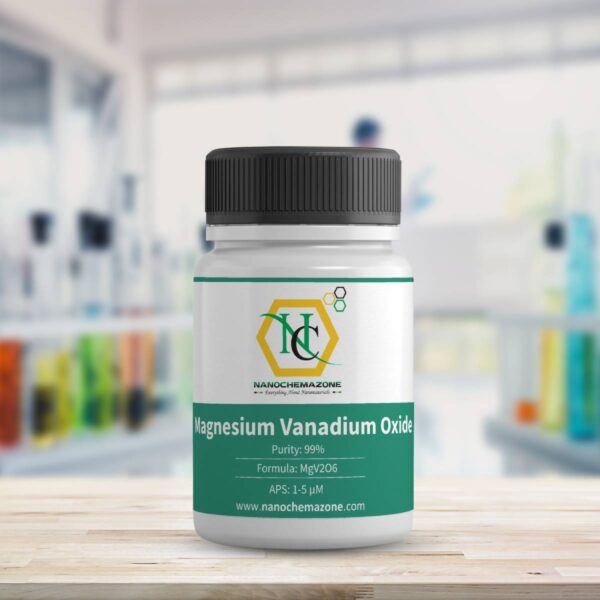
| Product |
|
| Colour |
N/A |
| Purity |
99% |
| Particle Size |
1-5 µM (Customizable) |
| Ingredient/MF |
ZnMoO4 |
| Product Code |
NCZ-CP-363/20 |
| CAS Number |
61583-60-6 |
| Density |
N/A |
| Melting point |
N/A |
| Boiling Point |
N/A |
| Molecular Weight |
N/A |
| Exact Mass |
N/A |
Molybdenum Zinc Oxide Description
Zinc:
Zinc is a Block D, Group 12, Period 4 element with an atomic weight of 65.38. The number of electrons in each of zinc’s shells is 2, 8, 18, 2, and its electron configuration is [Ar] 3d10 4s2.
The zinc atom has a radius of 134 pm and a Van der Waals radius of 210 pm. Zinc was discovered by Indian metallurgists prior to 1000 BC and first recognized as a unique element by Rasaratna Samuccaya in 800. Zinc was first isolated by Andreas Marggraf in 1746. In its elemental form, zinc has a silver-gray appearance.
It is brittle at ordinary temperatures but malleable at 100 °C to 150 °C. It is a fair conductor of electricity, and burns in air at high red producing white clouds of the oxide. Zinc is mined from sulfidic ore deposits. It is the 24th most abundant element in the earth’s crust and the fourth most common metal in use (after iron, aluminum, and copper).
The name zinc originates from the German word “zin,” meaning tin.
Molybdenum:
Molybdenum is a Block D, Group 6, Period 5 element with an atomic weight of 95.96. The number of electrons in each of molybdenum’s shells is [2, 8, 18, 13, 1] and its electron configuration is [Kr] 4d5 5s1. The molybdenum atom has a radius of 139 pm and a Van der Waals radius of 209 pm. In its elemental form, molybdenum has a gray metallic appearance. Molybdenum was discovered by Carl Wilhelm in 1778 and first isolated by Peter Jacob Hjelm in 1781. Molybdenum is the 54th most abundant element in the earth’s crust.
It has the third highest melting point of any element, exceeded only by tungsten and tantalum. Molybdenum does not occur naturally as a free metal, it is found in various oxidation states in minerals. The primary commercial source of molybdenum is molybdenite, although it is also recovered as a byproduct of copper and tungsten mining. The origin of the name Molybdenum comes from the Greek word molubdos meaning lead.
Related Information
Please email us for the customization.
Email: contact@nanochemazone.com
Please contact us for customization and price inquiry
Note: We supply different size ranges of Nano and micron as per the client’s requirements and also accept customization in various parameters.